Jostueltaitvesreizaz
Multiplayer networking in practice
Previously, netcode tweaks happened late in production. Now studios treat multiplayer networking design as core infrastructure that shapes matchmaking, latency handling, and live operations from the first playable build onward.
Live operations learning
Learn how real studios handled rollouts, regressions, and post-launch tuning for synchronization and session recovery.
Representative multiplayer networking projects
These projects began with live games already in players’ hands. Rewrites were off the table, deadlines were tight, and network conditions were unpredictable. Each case study shows how focused multiplayer networking work can reduce instability and confusion without tearing down what already functions well enough to ship. The emphasis stays on clear authority models, measurable latency handling, and matchmaking rules that producers and community teams can explain with confidence.

Mobile action
Stabilizing a mobile arena
A mid-sized studio running a real-time mobile arena game across India and Southeast Asia saw players complain about stuttering movement, delayed abilities, and confusing match errors. The existing model used ad hoc RPC calls with limited prediction and no clear recovery path after packet loss. We began with a short profiling phase, capturing real-world latency and jitter across priority regions. From there, we introduced a more disciplined client prediction and reconciliation scheme, tuned interpolation windows for typical mobile conditions, and reworked timeout handling to avoid instant disconnects. Matchmaking was adjusted to prefer regional proximity while still considering skill and party size. Rollout happened in stages, with feature flags and dashboards that surfaced rubberbanding rates and reconnect outcomes. The game retained its engine and backend, but networking behavior became more predictable for both players and operators.

Co-op console
Repairing co-op synchronization
A cross-platform cooperative adventure title struggled with desynchronization
between host and clients, especially when players joined mid-session or
experienced brief connection drops. Inventory states diverged, enemies
teleported, and rejoining often meant starting the mission again. The team
wanted to avoid replacing its entire networking layer. We worked with their
engineers to clarify the authority model, narrowing which systems were
host-controlled and which used client-side prediction. Replication rules were
simplified, with explicit ownership and update frequencies documented. A
structured rejoin flow allowed players to return to an in-progress session with
validated state rather than a full reset. Observability improved through
session-level metrics and logs tied to specific synchronization failures.
Post-launch, the studio could iterate on tuning without re-opening fundamental
architecture questions.
Real multiplayer problems, real constraints
These case studies share a pattern. Each team arrived with a working game, real
players, and a networking layer that had grown organically. The first project, a
mobile real-time battler, struggled with jitter on variable Indian networks and
an opaque matchmaking flow that confused players. We introduced a clearer client
prediction and reconciliation model, plus a simplified matchmaking evaluator
that balanced latency and skill without exploding queue times. The second
project, a cross-platform co-op title, faced desynchronization issues and
painful reconnect flows. There, the focus was on choosing a consistent authority
model, tightening replication rules, and defining explicit rejoin states. In
both cases, the studio kept its existing engine and live operations stack. The
work happened in small, verifiable steps: profiling, targeted experiments, and
production rollouts with observability. The result was not perfection, but
multiplayer that behaved more predictably for both players and operators.
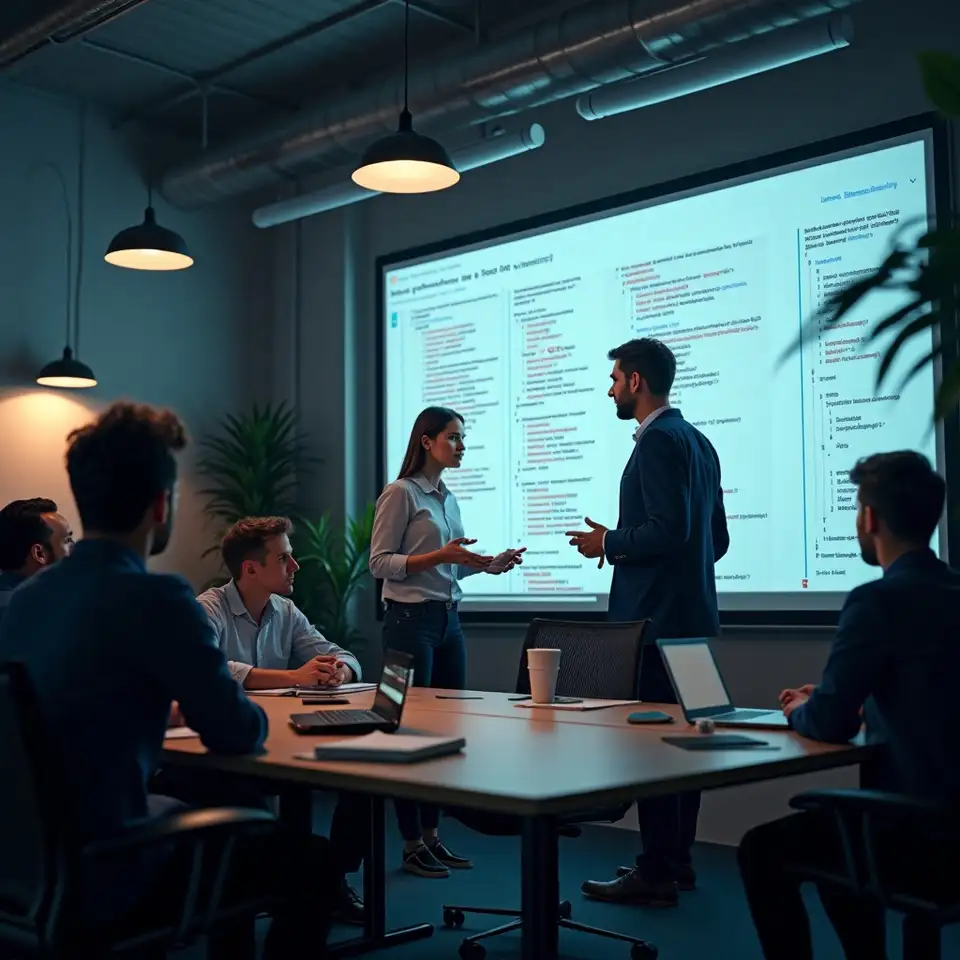

Typical project lifecycle
Most multiplayer networking projects follow a repeatable pattern from first pain to stable operations.
What teams report
Technical leads describe how targeted networking work changed day-to-day operations, from fewer late-night incidents to clearer decisions about latency and matchmaking trade-offs.

Ananya Rao
Executive producer for mobile multiplayer
Studio partner
"We came in asking for a miracle fix to rubberbanding and left with a structured way to reason about latency. The team did not promise magic; they mapped our constraints, ran focused tests, and then showed which networking changes would have the highest impact for our players and operators."

Rahul Mehta
Technical director for cross-platform title
Game studio
"Our matchmaking logic had grown messy over several releases. They helped us separate hard constraints from preferences, then implemented a clearer evaluator that balanced latency, skill, and party size. Queue times stayed reasonable, and we finally had metrics we could trust during events."

Mira Desai
Lead engineer for cooperative gameplay
Game developer
"Desync bugs used to feel random. After the engagement, we had a documented authority model, explicit replication rules, and tools to reproduce edge cases. Not everything disappeared, but we could finally debug issues without guessing. That changed how confident the team felt shipping updates."

David Lin
Operations lead for online services
Publishing group
"Before, every spike in error rates turned into an all-hands incident. With the new metrics and dashboards, we can see whether a problem is matchmaking, session management, or external network conditions. That does not remove incidents, but it shortens the path from alert to concrete action."
See how other teams handled similar multiplayer challenges
Some of the most instructive multiplayer networking projects operate under NDA. For qualified teams, we offer a private walkthrough of relevant case studies that match your engine, genre, and traffic profile. The session covers architecture choices, monitoring setups, and rollout strategies, including what did not work as expected. Expect a direct technical conversation with engineers, not a sales presentation. Results may vary depending on your starting point, timelines, and production constraints.